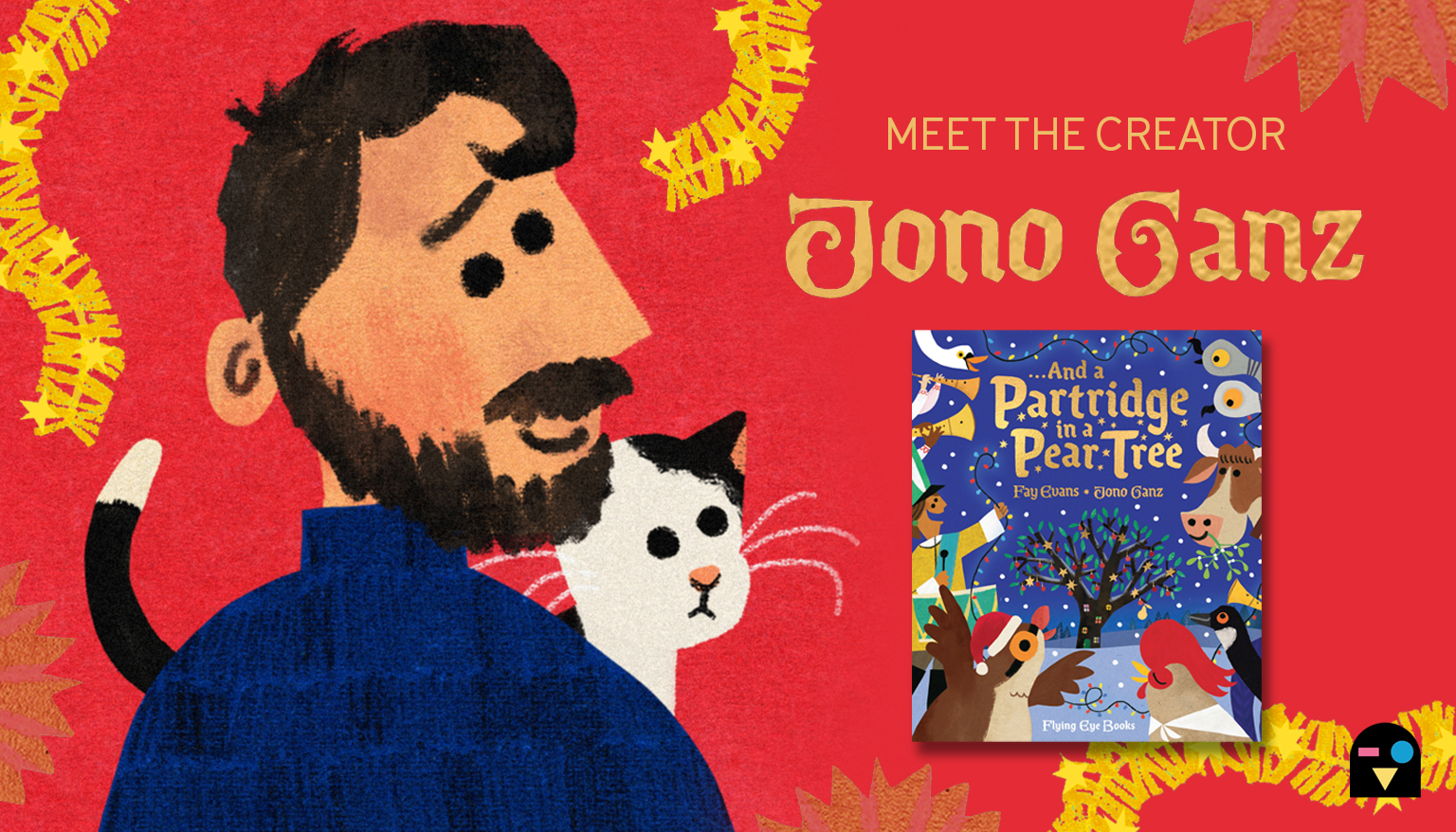
Jono Ganz is an author, illustrator and animator. His first picture book with Flying Eye Books is …And a Partridge in a Pear Tree, which is a whole load of festive fun! Jono lives and works in London, in the home he shares with his wife, son, and their very large and very grumpy cat, Donnie. Read on to learn about Jono’s process, inspirations, and more.
Hi Jono! Please tell us a little about your background, e.g. your childhood, education, and path to becoming an illustrator.
I spent a lot of my youth making comics and made-up album covers, but sort of abandoned it as I didn’t really feel there was a place for what I wanted to do in my art class at school.
I went to study English Literature at the University of Southampton as an excuse to read novels instead of textbooks, and ended up playing in bands on the local scene. Out of necessity, I started making gig posters, music videos and album artwork, usually by cutting up photos or magazines and rearranging things until they felt good. The bands didn’t last but I’m still scribbling and wiggling bits of paper around.
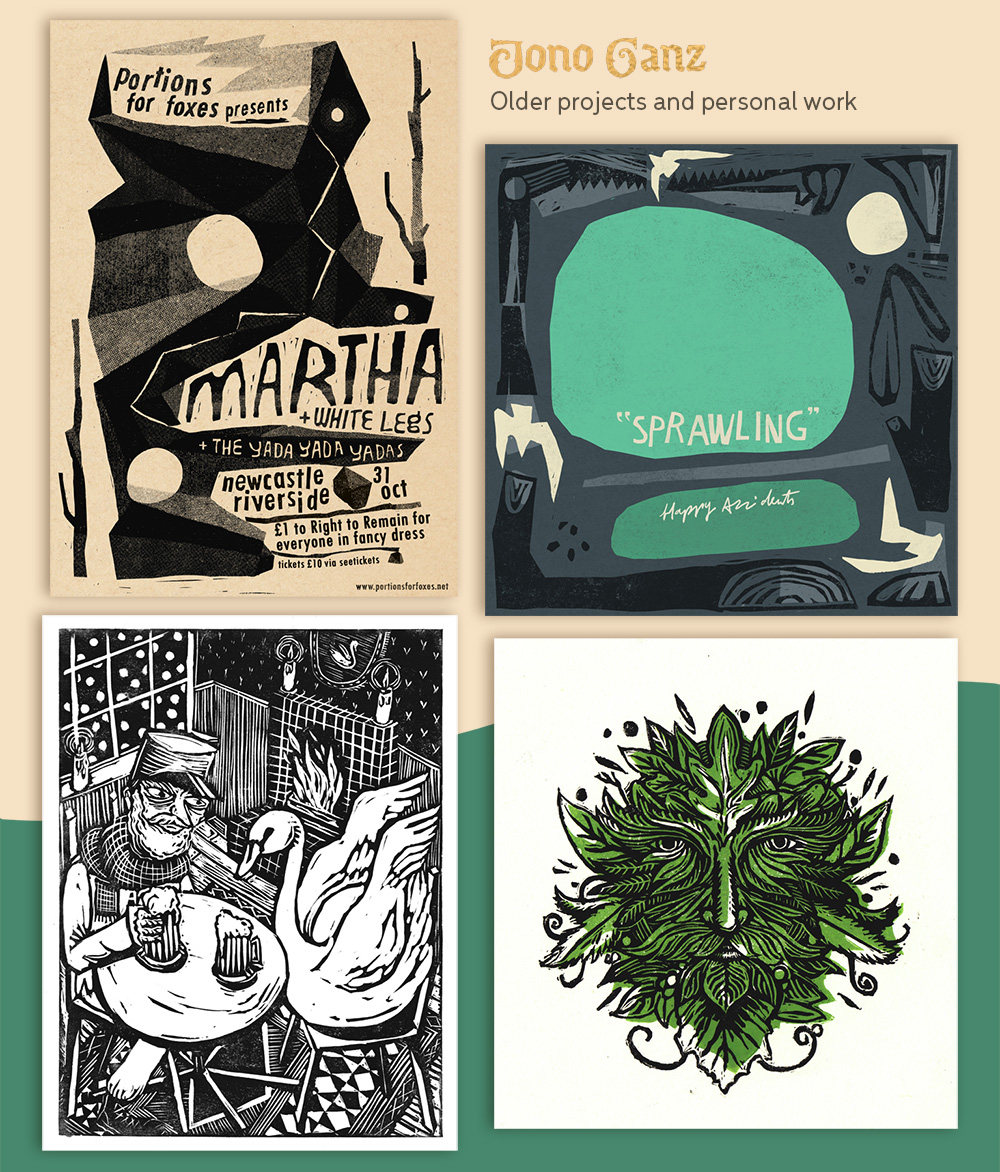
I started working in the bookshop at Tate Modern, and that turned out to be a huge inspiration, not only from the countless incredible works of art I’d spend my days alongside, but also from the huge selection of gorgeously illustrated children’s books we sold in the shop. It helped that many of the staff were also working on their own creative projects.
What are your main creative influences?
One of the most formative moments for me as an artist was visiting an Edvard Munch exhibition in Vienna and falling in love with his woodcuts – the mark making, the visible grain of the wood. I felt compelled to try it myself and I spent a few years with relief printing as the focus of my practice, cutting away at whole blocks of wood and lino to reveal illustrations delineated by the negative space. Using a wooden spoon as my DIY printing press, I could never really get the print quality I wanted and it was always a bit too messy, but it still feels like a very special medium to me.
I work predominantly digitally now, but one of the things I’ve taken away is the process of removal: for most of my illustrations, I start with a blank slate – a texture or a splash of colour – and then I chip away at it, erasing what isn’t needed until a form appears. I find that the results can often be more interesting to me, surprising even, when I work via subtraction.
Where do you find inspiration for your work?
I’m a huge fan of the picture book as a form, and many of my favourite artists are picture book illustrators – Alice and Martin Provensen, Christian Robinson, Mitsumasa Anno, Carson Ellis. The bookshelf I share with my toddler is a constant source of inspiration, but I try not to take too much influence from other books, as there’s always the temptation to compare yourself to others working in the same field.
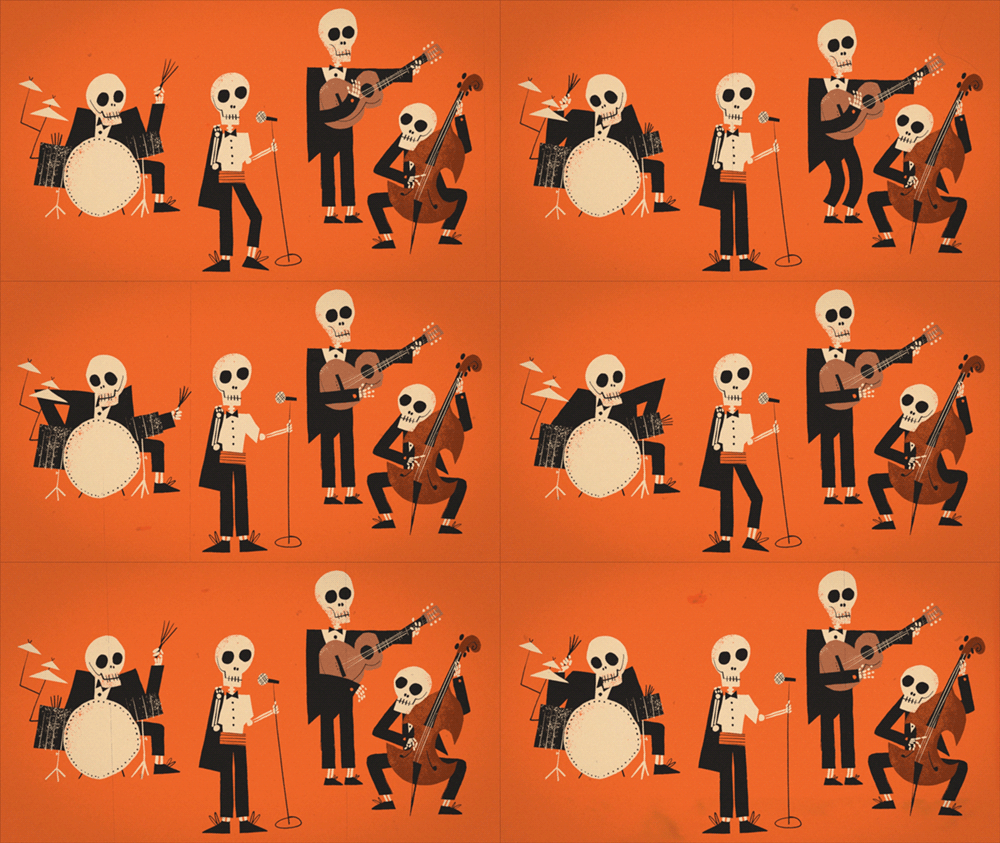
I find it really inspiring looking at other art forms too – film, painting, album covers, toy design. I think a lot of creative disciplines are more interlinked than we really realise. For instance, my research into horror film title sequences for an animated music video project really informed my sense of timing, which is something that I think is crucial in making picture books.
Influences for my work on And a Partridge in a Pear Tree include UPA animation, Alfred Hitchcock’s The Birds, medieval manuscripts and Charlie Brown (to name a few).
Tell us a bit about your writing/illustration process.
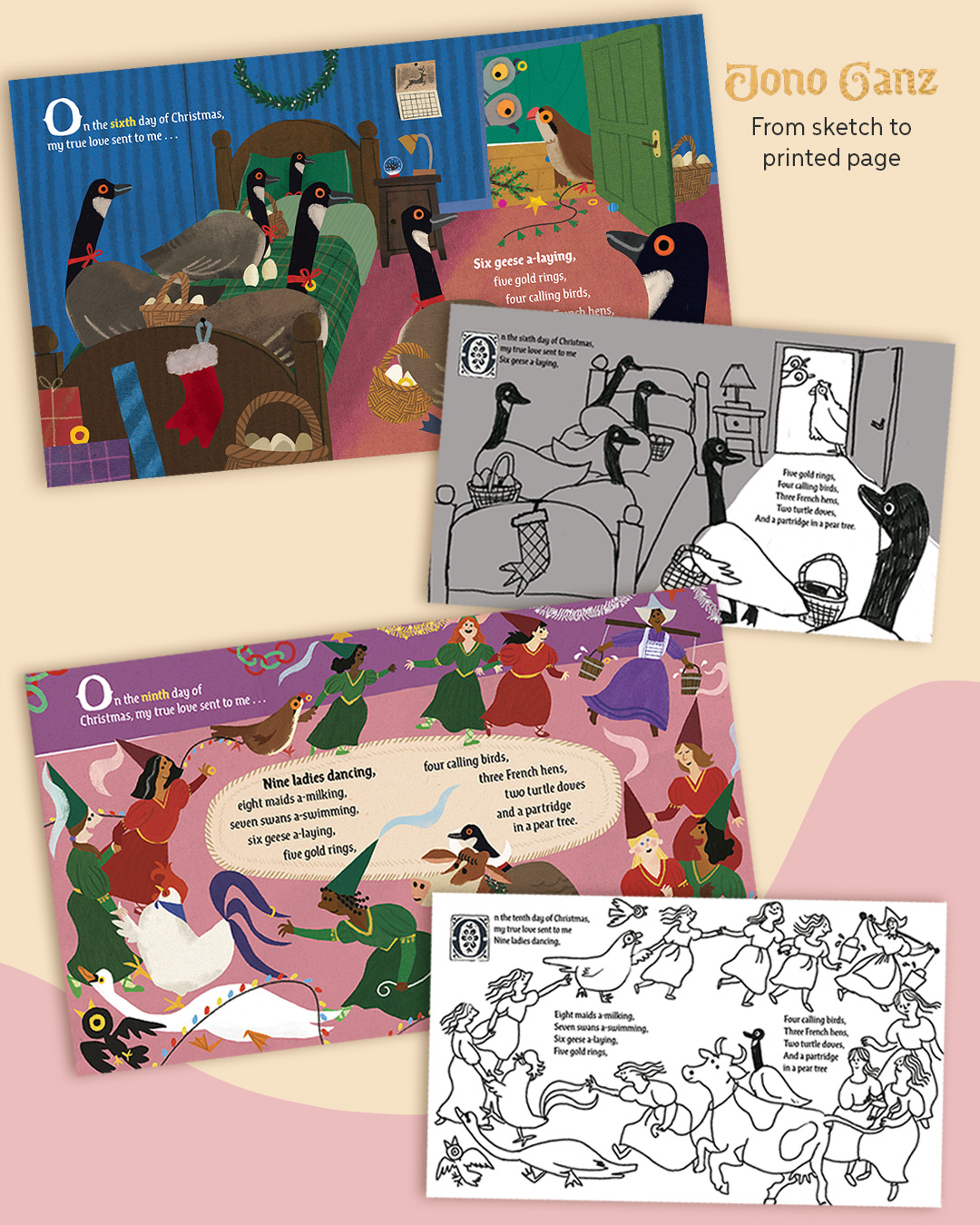
When working on a picture book, I think a lot about the spreads as a whole, and how they interact with each other. I tend to draw out thumbnails with composition sketches, often before I even start on character designs.
Once the framework is done, I start looking at building forms with colours and textures, collaging from a bank of scanned paper and other digital resources. I try not to follow my sketches too precisely, as I find that accidents can lead to really interesting results. Working digitally, it’s so easy to undo or erase, so working sometimes a little carelessly is my way of introducing a bit of character into the process.
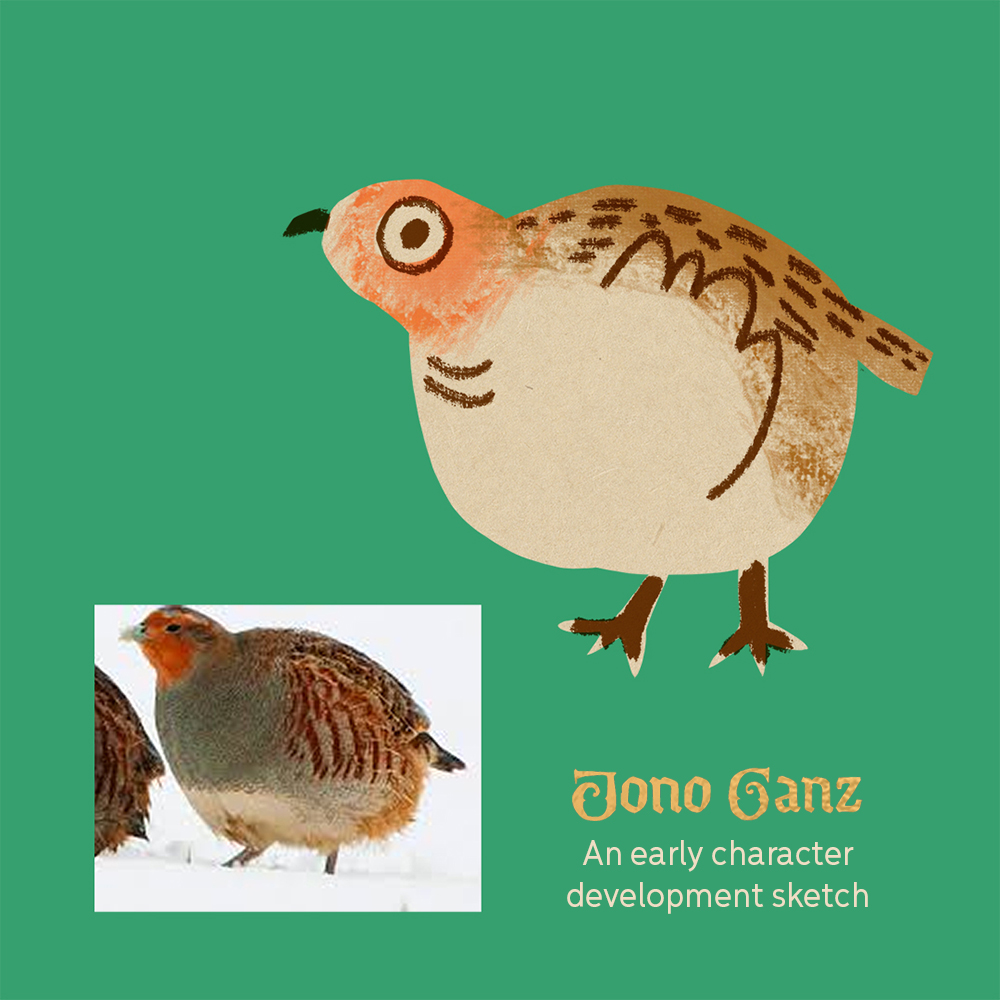
I love adding in little details to spot, and this is usually the fun bit at the end. After they are introduced in And a Partridge in a Pear Tree, the five gold rings reappear throughout the text on every page, which I hope is a fun easter egg that rewards repeat readings.
Christmas lightning round!
- Which character from Partridge do you most relate to? Are you more of a Christmas homebody or are you more of a lord-a-leaping?
I’m definitely a bit like the partridge towards the end of the book: he has accepted the chaos of Christmas and is actually starting to have a great time (much like my experience living with a toddler).
- What’s your favourite Christmas song (apart from …And a Partridge in a Pear Tree, of course)
I’ve always liked the 12 Days of Christmas because it’s so completely bananas (who is sending all of these things?!), so I was super excited to get to translate it into a chaotic picture book. Otherwise, every year we listen to Vince Guaraldi’s A Charlie Brown Christmas, and I think Skating is one of my favourite pieces of music ever written.
- Which spread from Partridge is your favourite (and why)?
Six geese a-laying. It’s spooky, it’s weird, the geese’s eyes are all glowing in the darkness and the partridge has absolutely no idea what’s going on. I’m so glad I got to put this scene in a festive picture book.
Thank you, Jono!
…And a Partridge in a Pear Tree
by Jono Ganz, Fay Evans
On the first day of Christmas… Partridge was very happy in his Pear tree. On the second day of Christmas… Everything changed…
Join the Partridge from the classic carol as all these other guys (and those five gold rings) turn up at their pear tree this Christmas. A hilarious journey through the verses of the song ending in a little twist.
Illustrated by the brilliant Jono Ganz, this fresh look at a well-loved Christmas song is the perfect laugh out loud family read.
Get your copy HERE
