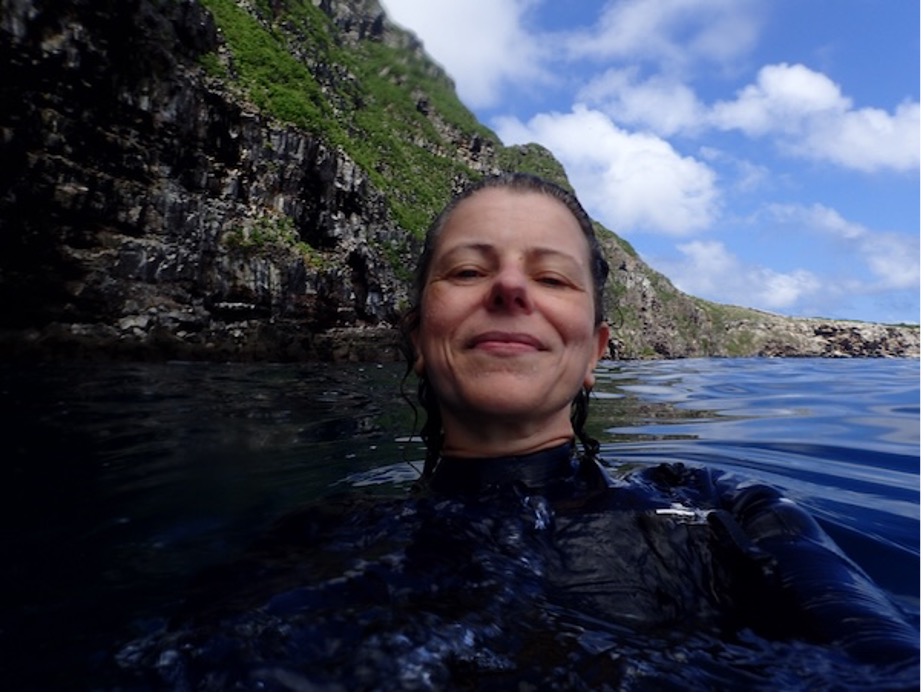
This World Oceans Day, scientist and author of the Scientists in the Wild series Dr Helen Scales has joined us to tell us all about her latest adventure in the Galápagos Islands! Over to you Helen!
When I wrote Scientists in the Wild, Galápagos, I had never actually been there — only dreamed about it. That’s one of the reasons I decided to write the book. I wanted to imagine what it would be like to go there with a gang of scientists to explore the amazing wildlife of the islands.
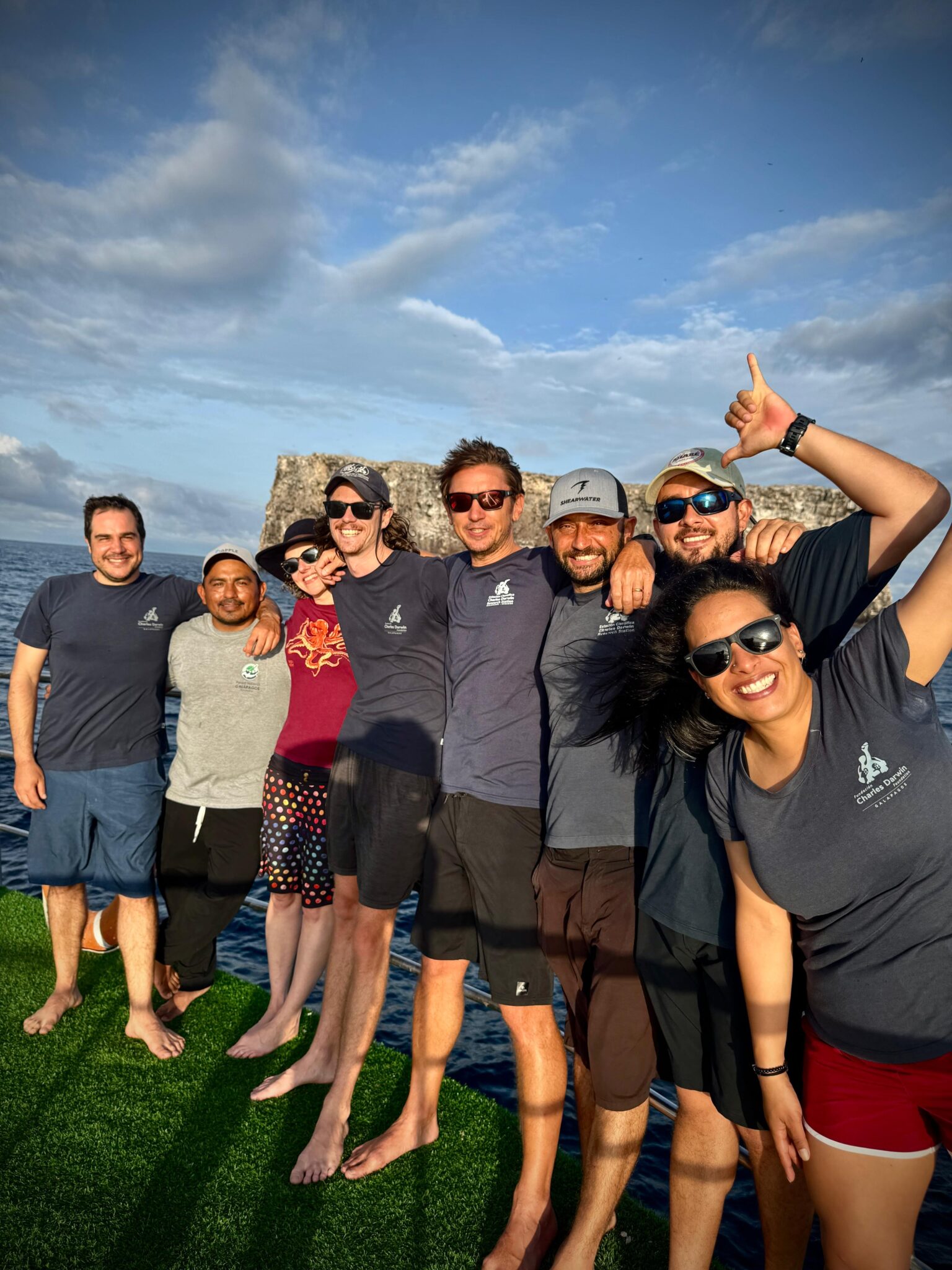
Then earlier this year my dream came true. I was invited to join a team of marine biologists from the Charles Darwin Foundation on an expedition to study the marine animals of Galápagos. Of course I leapt at the chance.
As soon as I arrived, I felt like I’d stepped into the pages of my book. I stayed in town for a few days before heading out to sea and already saw lots of the animals I’d written about.
I fell instantly in love with the marine iguanas. They’re a Galápagos speciality — they don’t live anywhere else in the world. I saw them all over the place. They were lying stretched out on pavements in town, soaking up the sunshine. I even got to swim alongside a few at the beach.
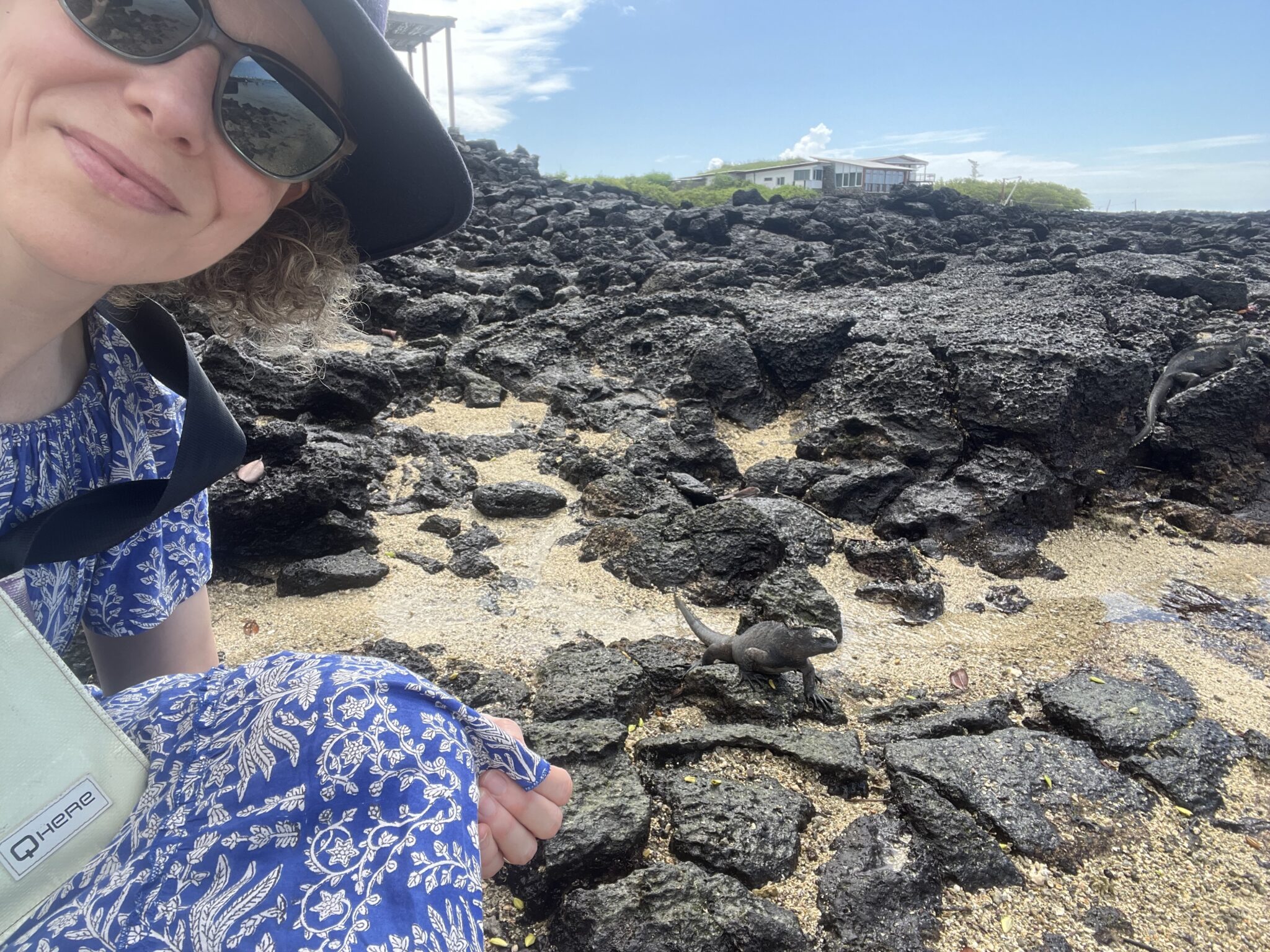
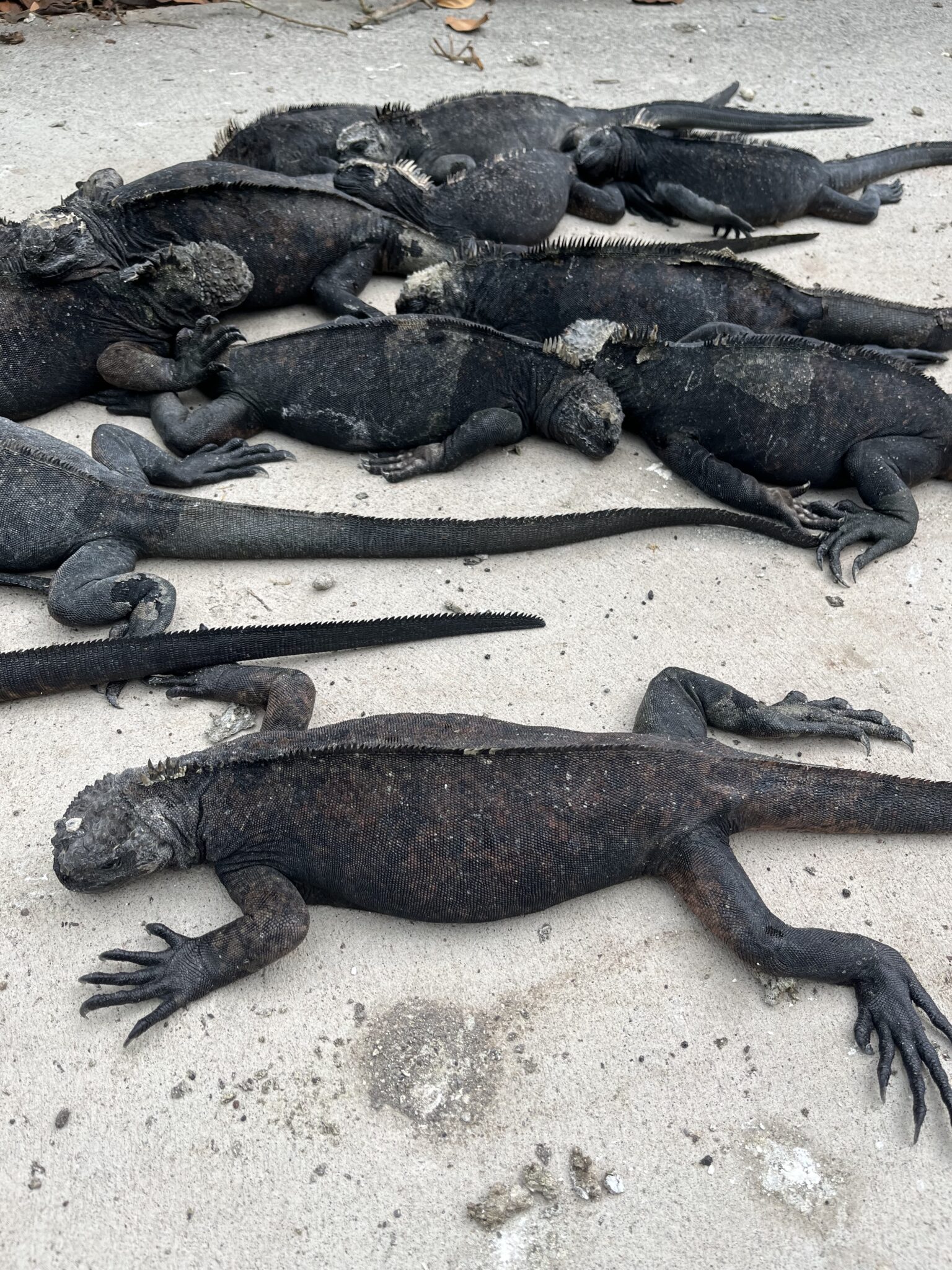
The marine iguanas were much smaller than I was expecting. So cute! All the bigger males had left the islands after the end of the breeding season. The ones I saw were all females and baby iguanas. They looked like little dinosaurs.
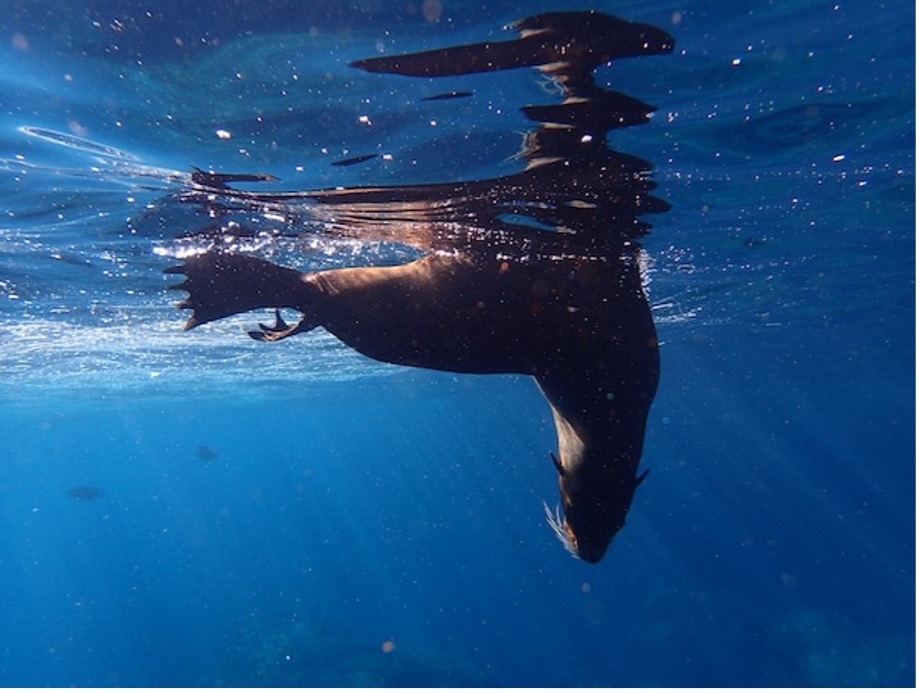
I saw Galápagos sea lions – and more importantly, I smelt them. They were all over town snoozing on benches. It’s a good thing my book doesn’t come with the fishy smells of Galápagos!
Then came the exciting day of departure. Early in the morning, I met with the team from the foundation. Just like in the book, the team came from all over the world, including Kati from Ecuador and Carlos from Galápagos.
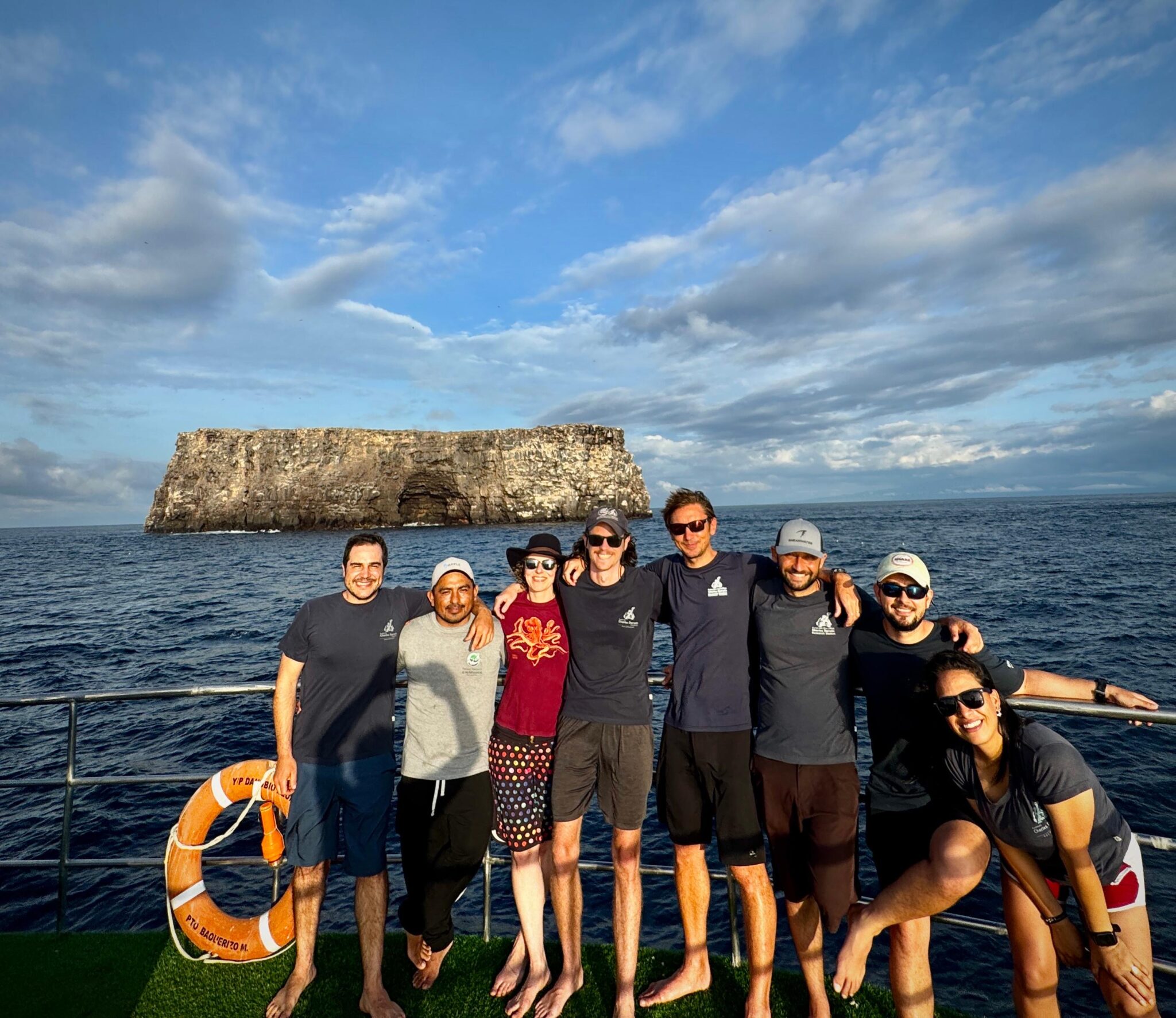
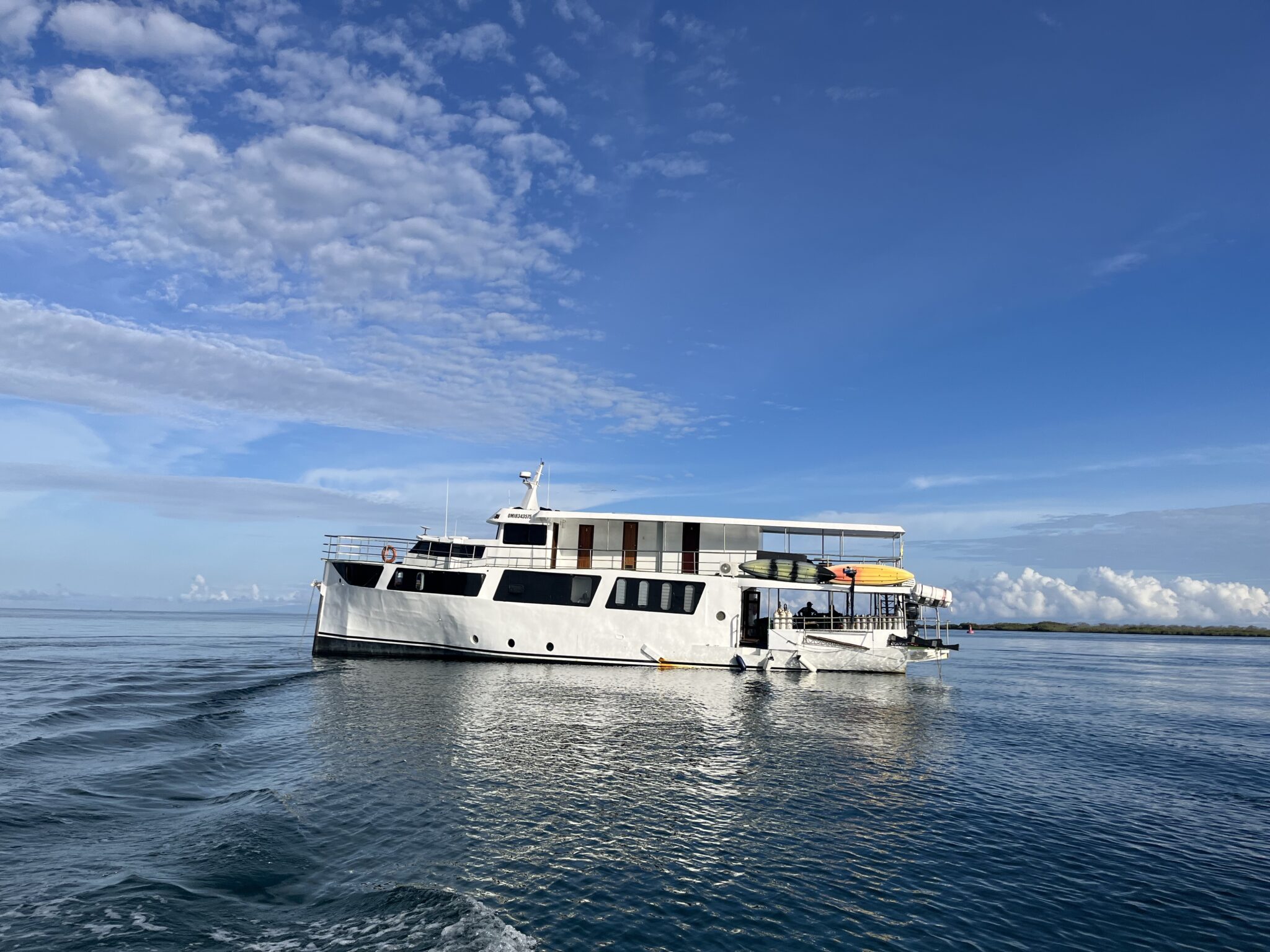
We loaded up all our science and diving gear into pickup trucks and drove to the other side of Santa Cruz Island to meet the ship’s crew. Our home for the next two weeks was a boat that usually takes scuba divers to explore the islands. It wasn’t quite as big as the research vessel Sula in the book, but it had everything we needed.
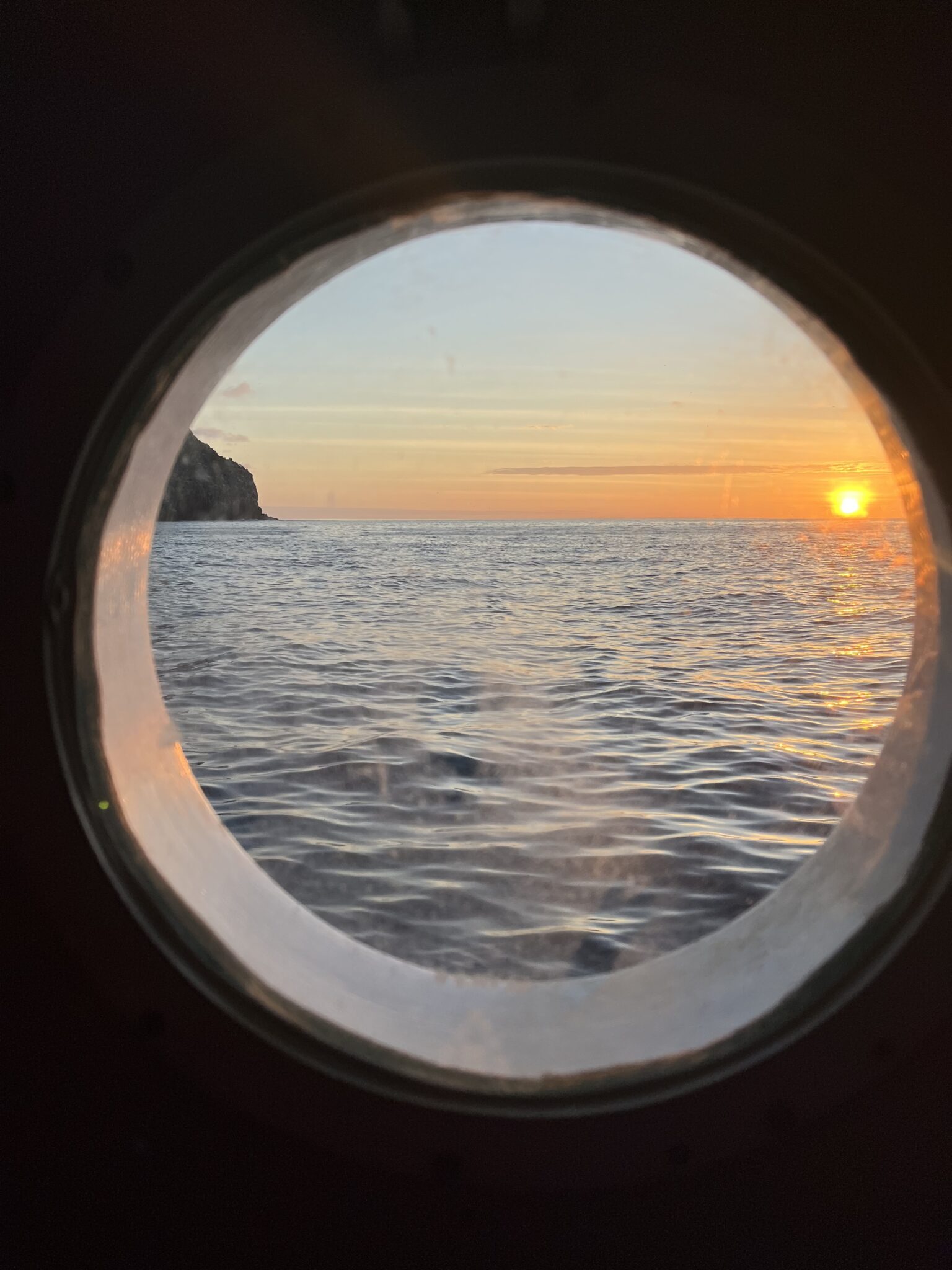
My cabin was below decks. I could lie in my bunk and look out across the waves through the round porthole.
It took us 24 hours of sailing non-stop to the north to reach our main destination: Darwin and Wolf Islands. These islands are more than a hundred miles from the rest of Galápagos, and they were the last stop made by team Sula.
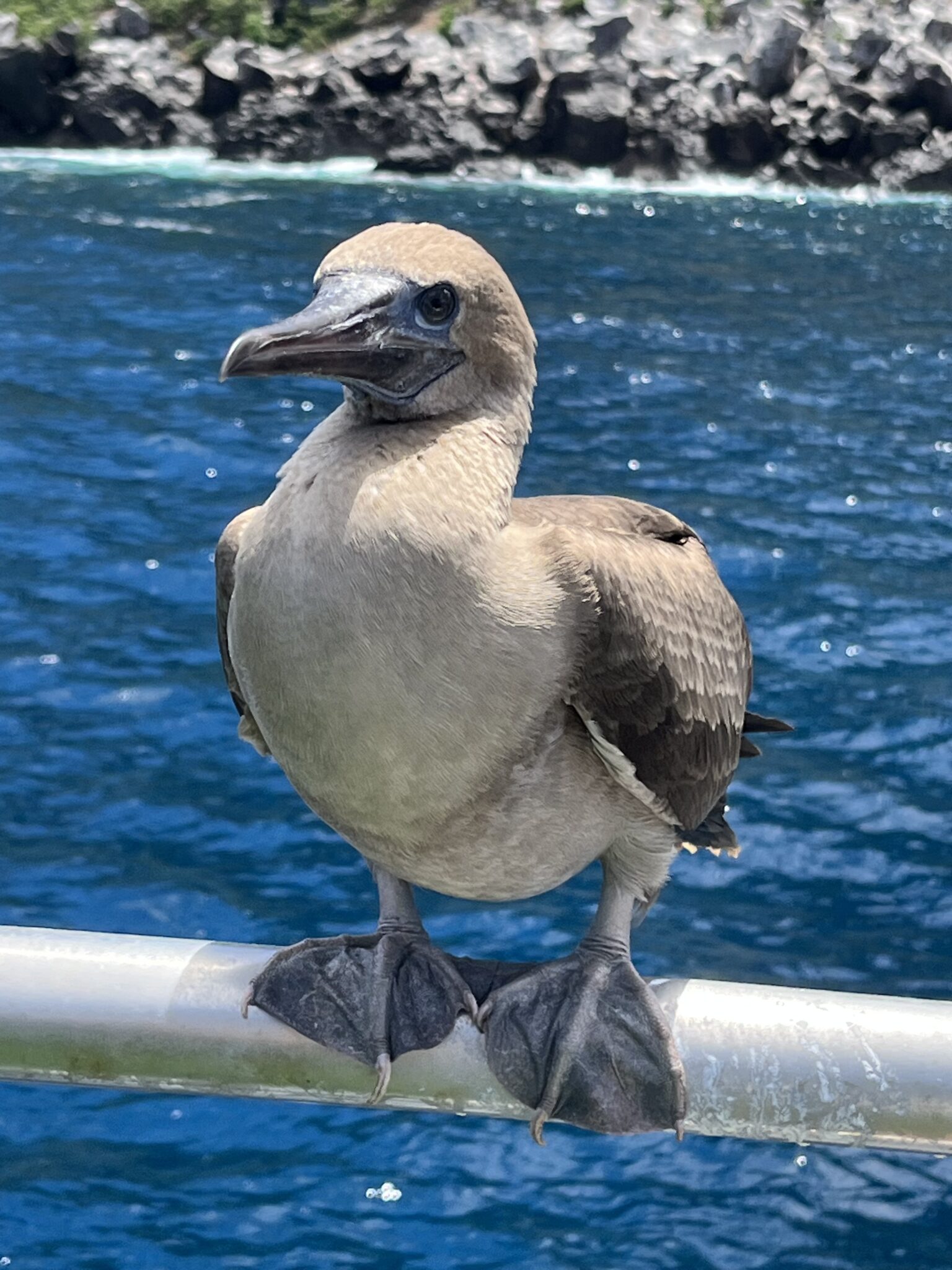
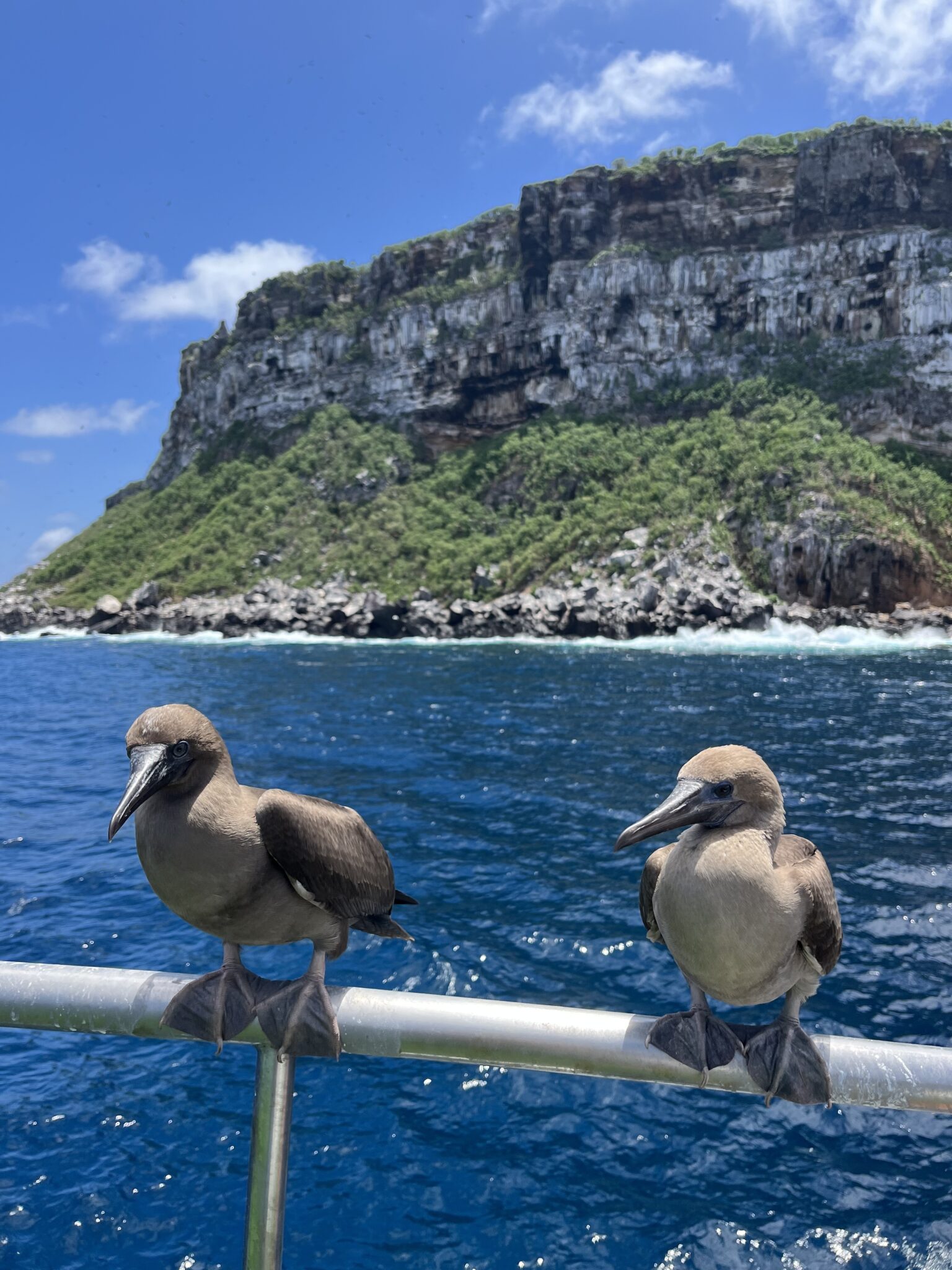
As we got closer to Wolf Island, red footed boobies flew up and hitched a ride on our boat.
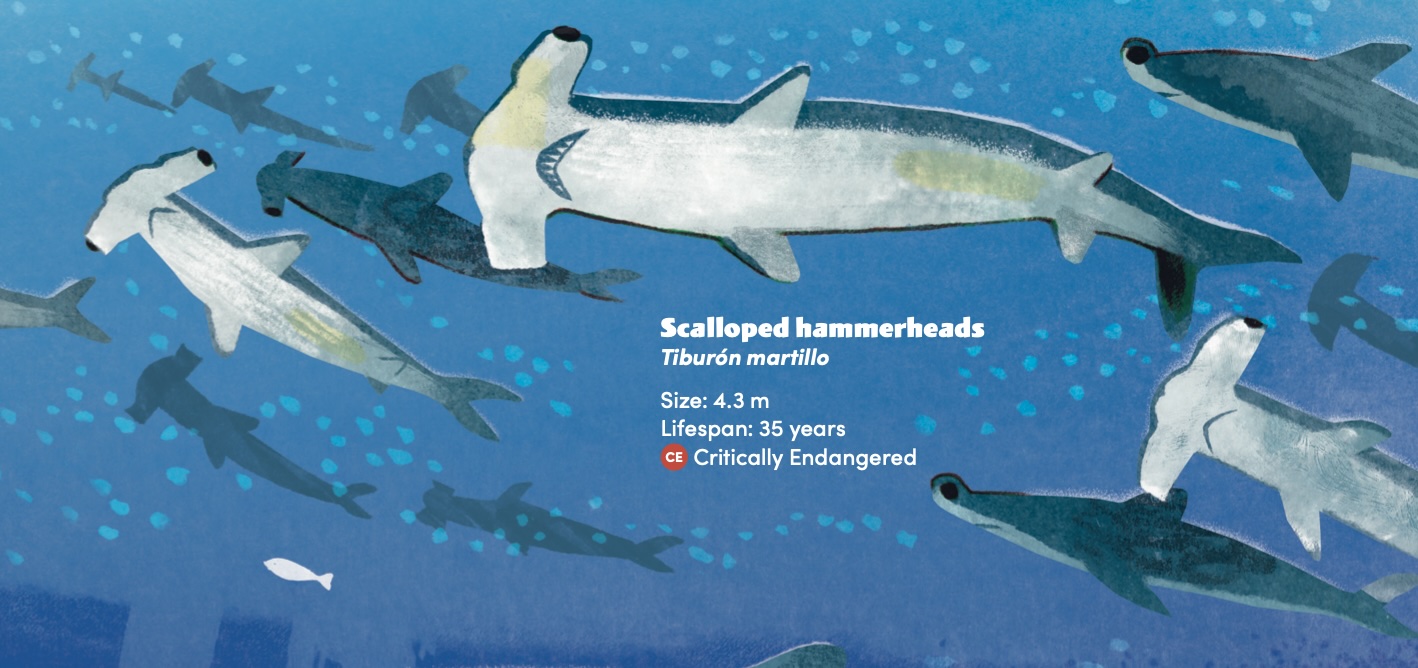
Our main task on this expedition was to study sharks. I saw loads of a species that appears in the book. Every time I jumped in the water I saw scalloped hammerhead sharks — sometimes dozens at once. I had never seen one before. They are so weird and cool with their T-shaped heads.
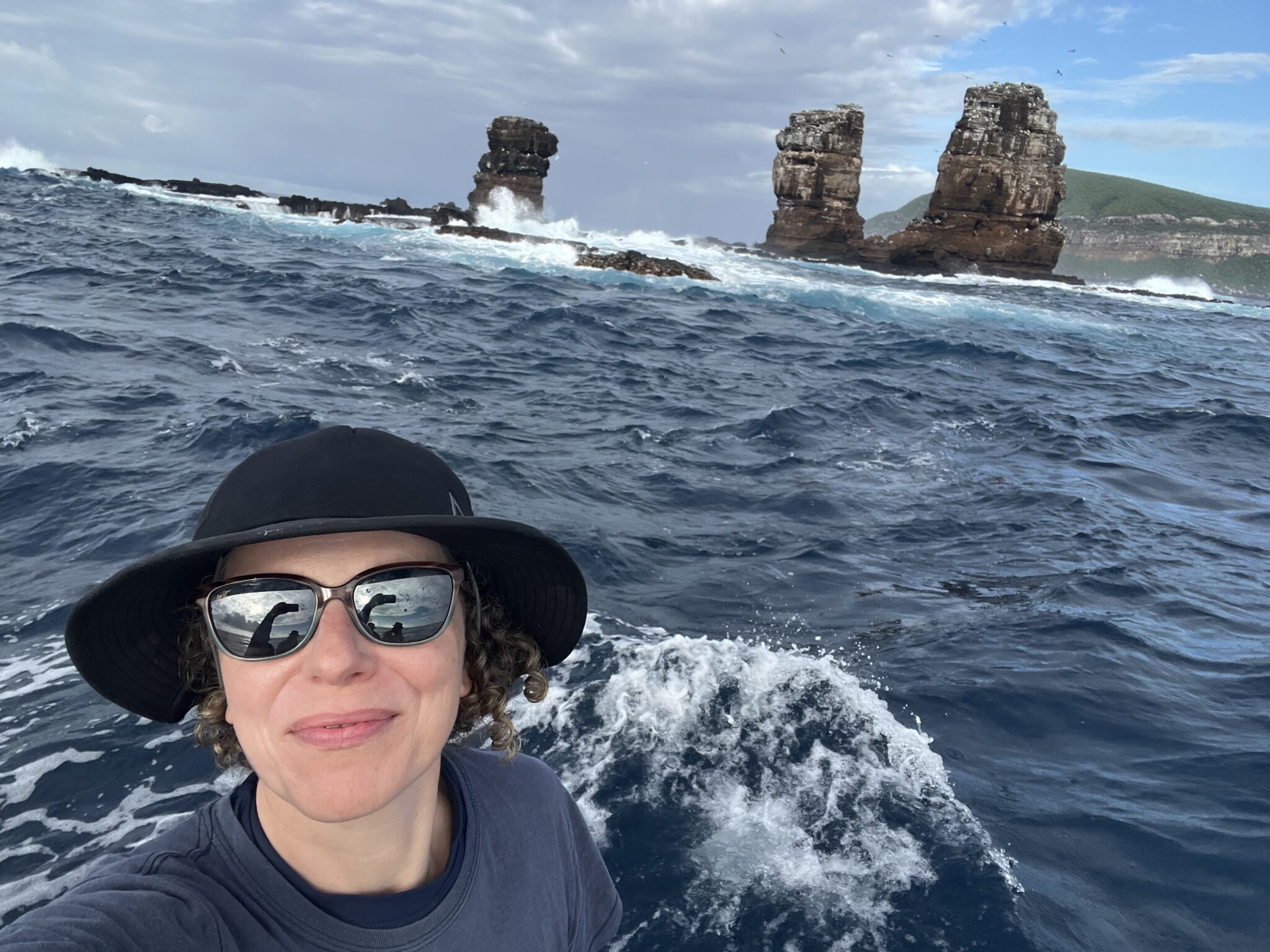
I saw the famous Darwin Arch, which appears in the book. A few years ago the arch fell down leaving these bits stick up!
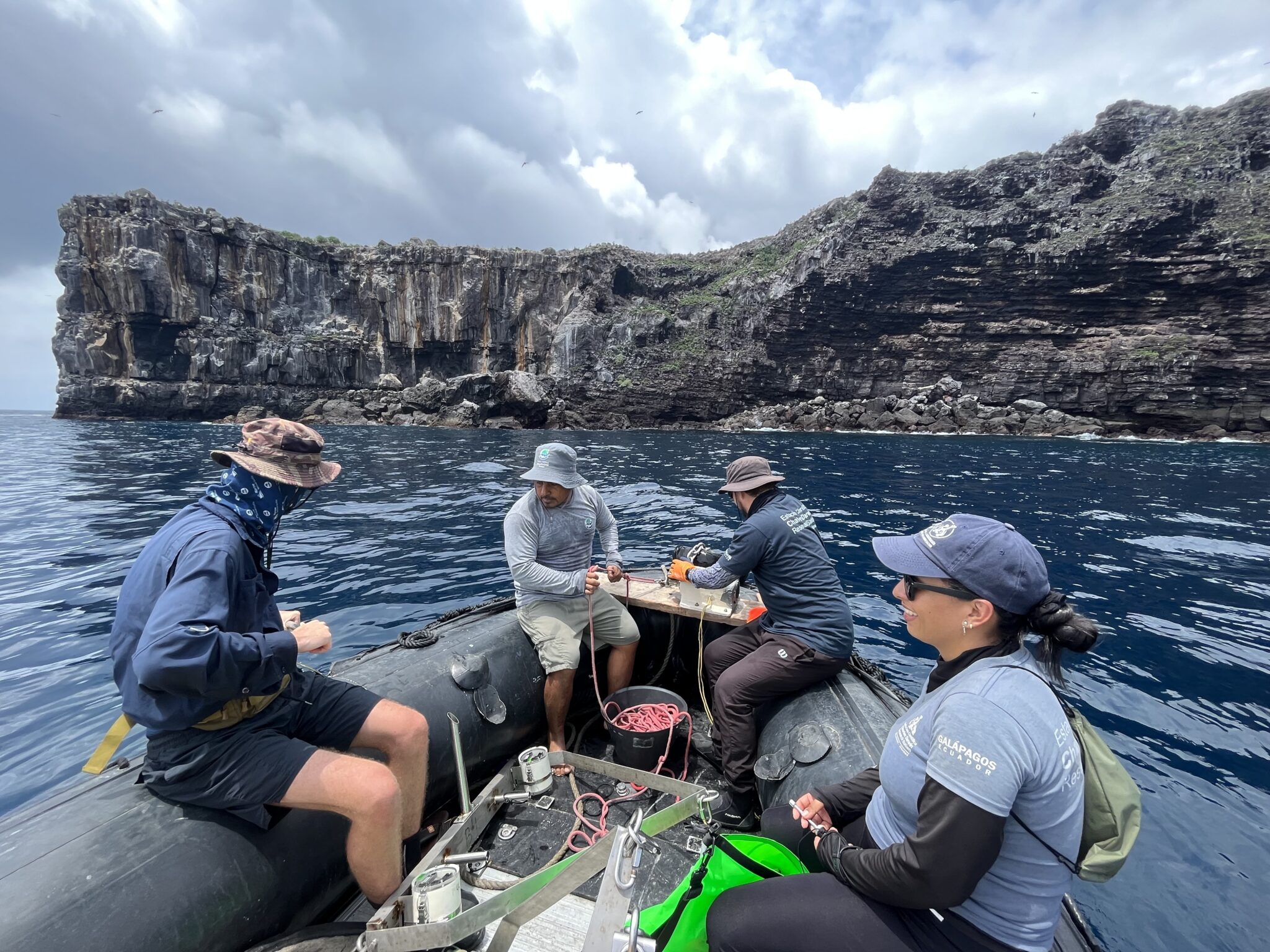
We did lots of scientific studies at Darwin and Wolf Islands. We lowered down waterproof cameras into the sea to see how many sharks were swimming around. We tagged sharks with satellite trackers to see where they swim. In the book, the Sula team tags a tiger shark and discovers that it stays in Galápagos. The scalloped hammerhead sharks we tagged went on much longer journeys. They swam hundreds of miles all the way to the mainland of Central America.
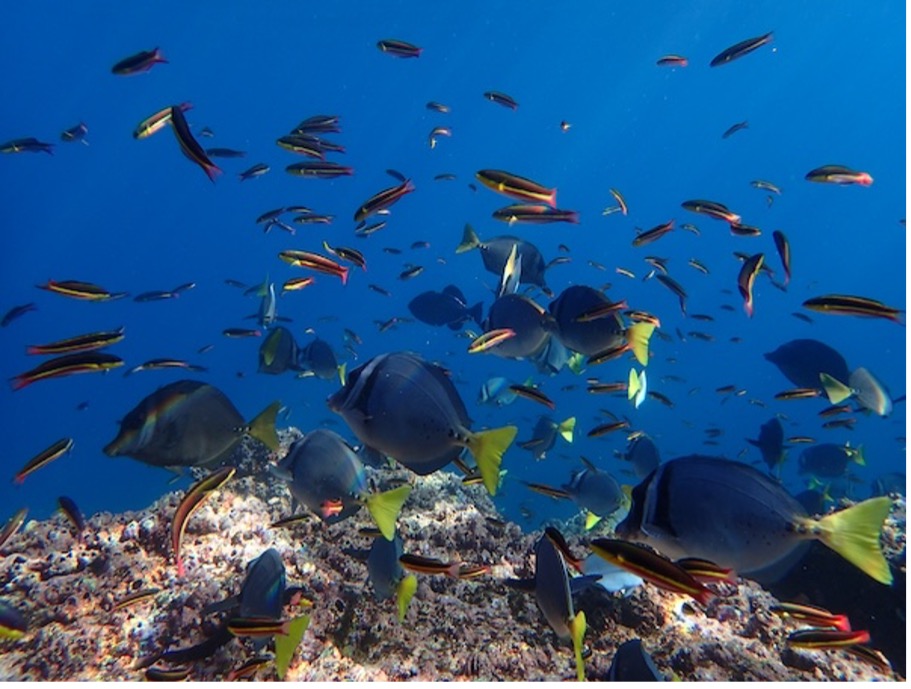
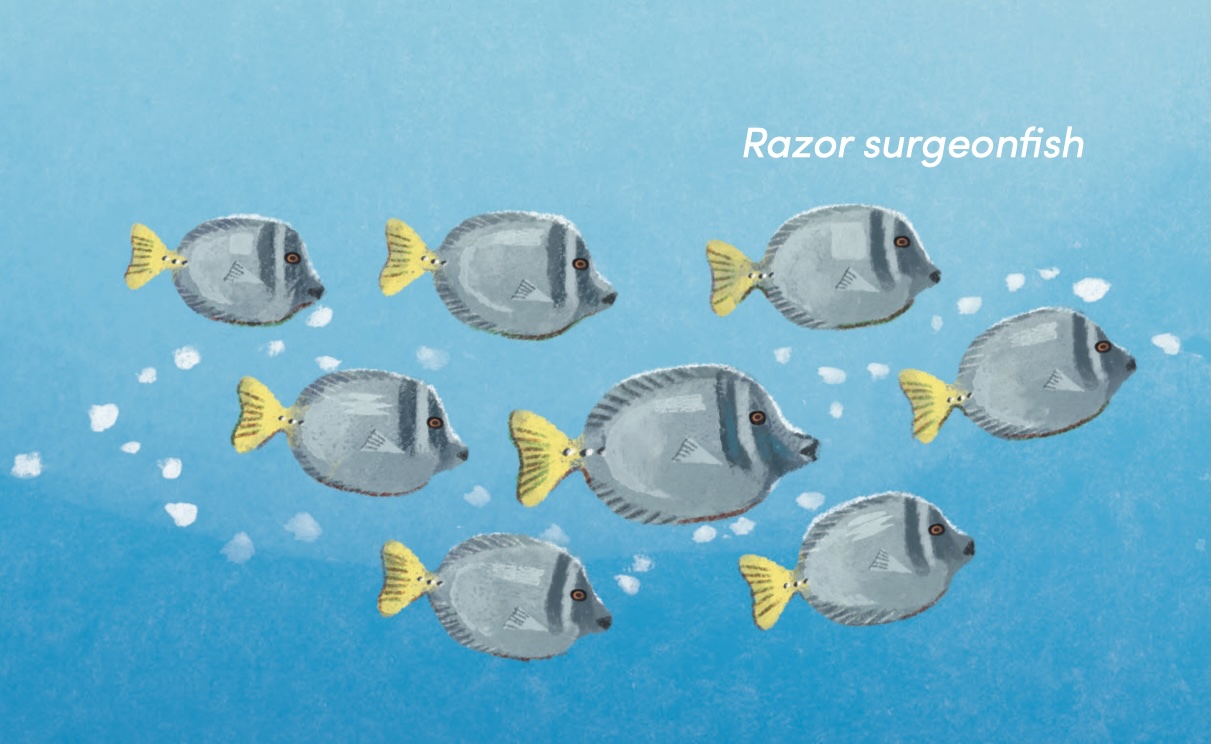
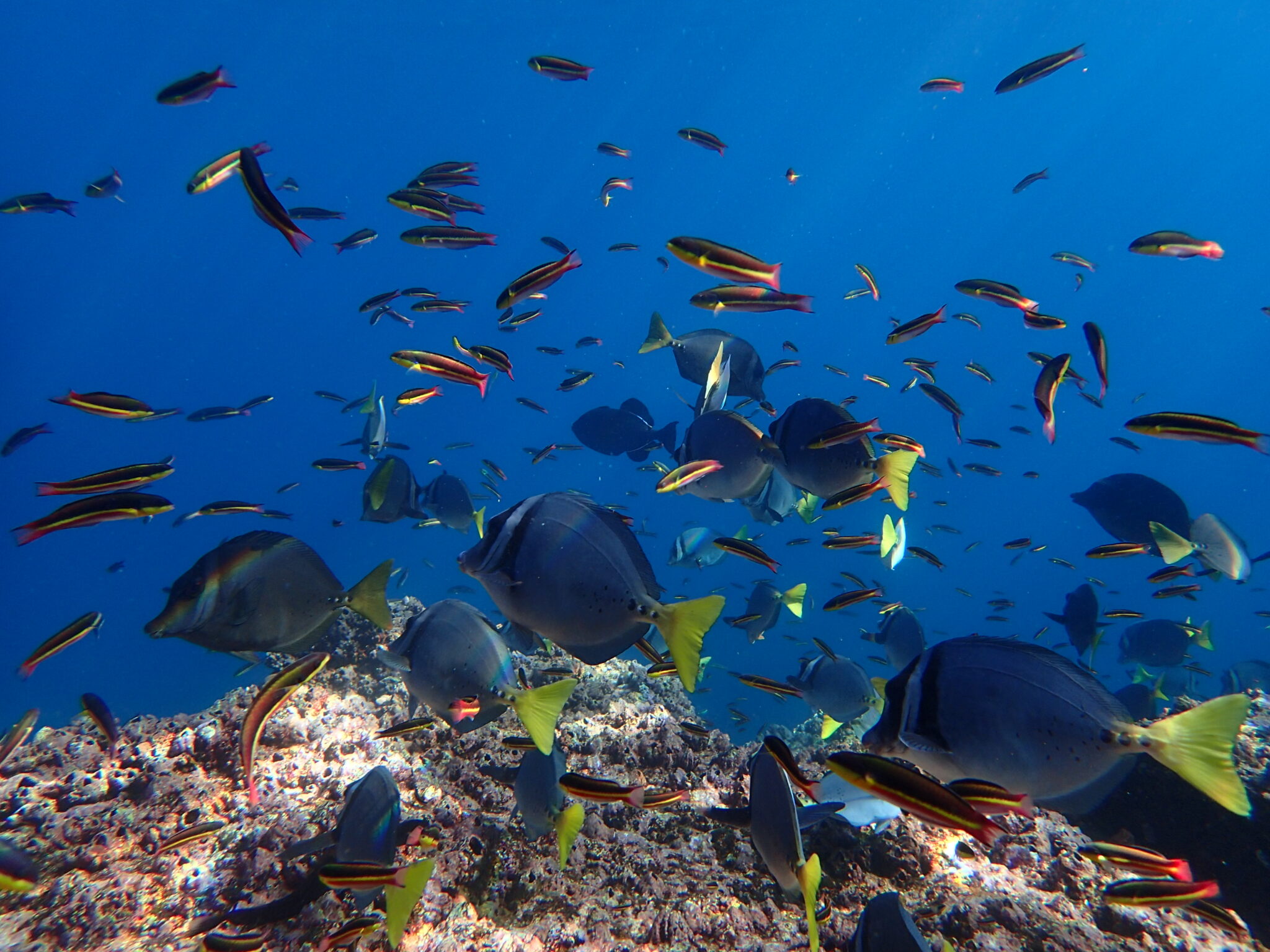
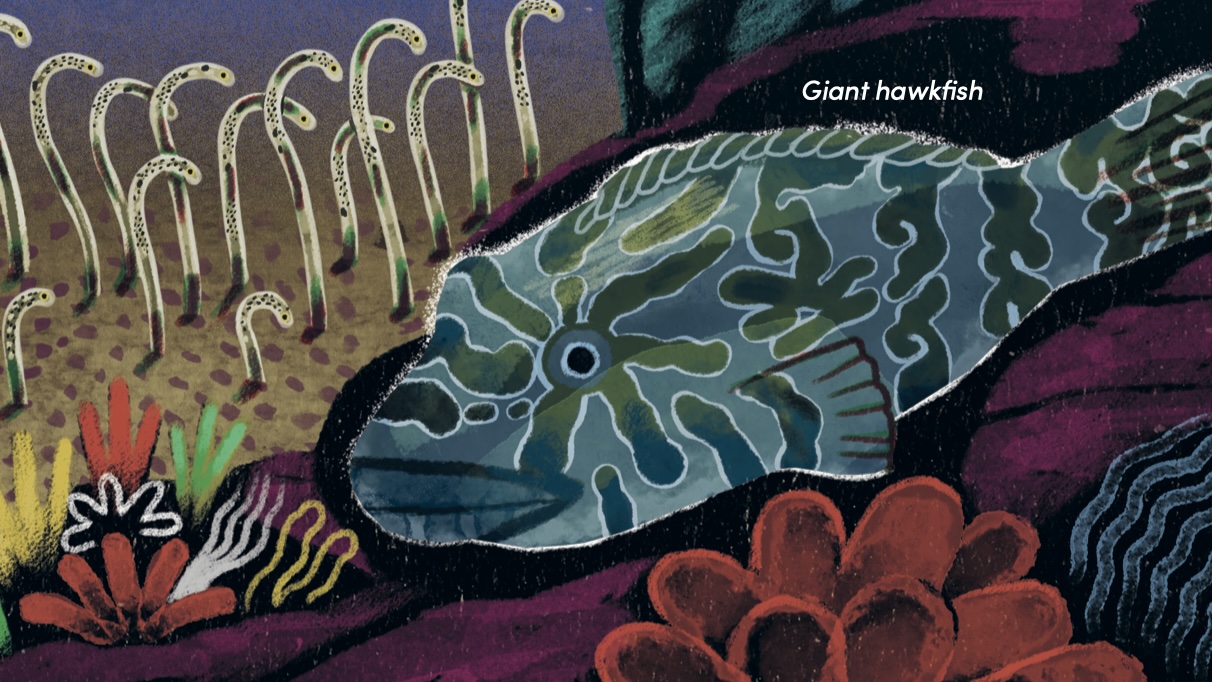
While I was scuba diving and snorkelling I saw loads of animals that I recognised from Rômolo’s amazing illustrations in the book. I remember on one dive seeing a giant hawkfish and thinking “Hello! I know you!”
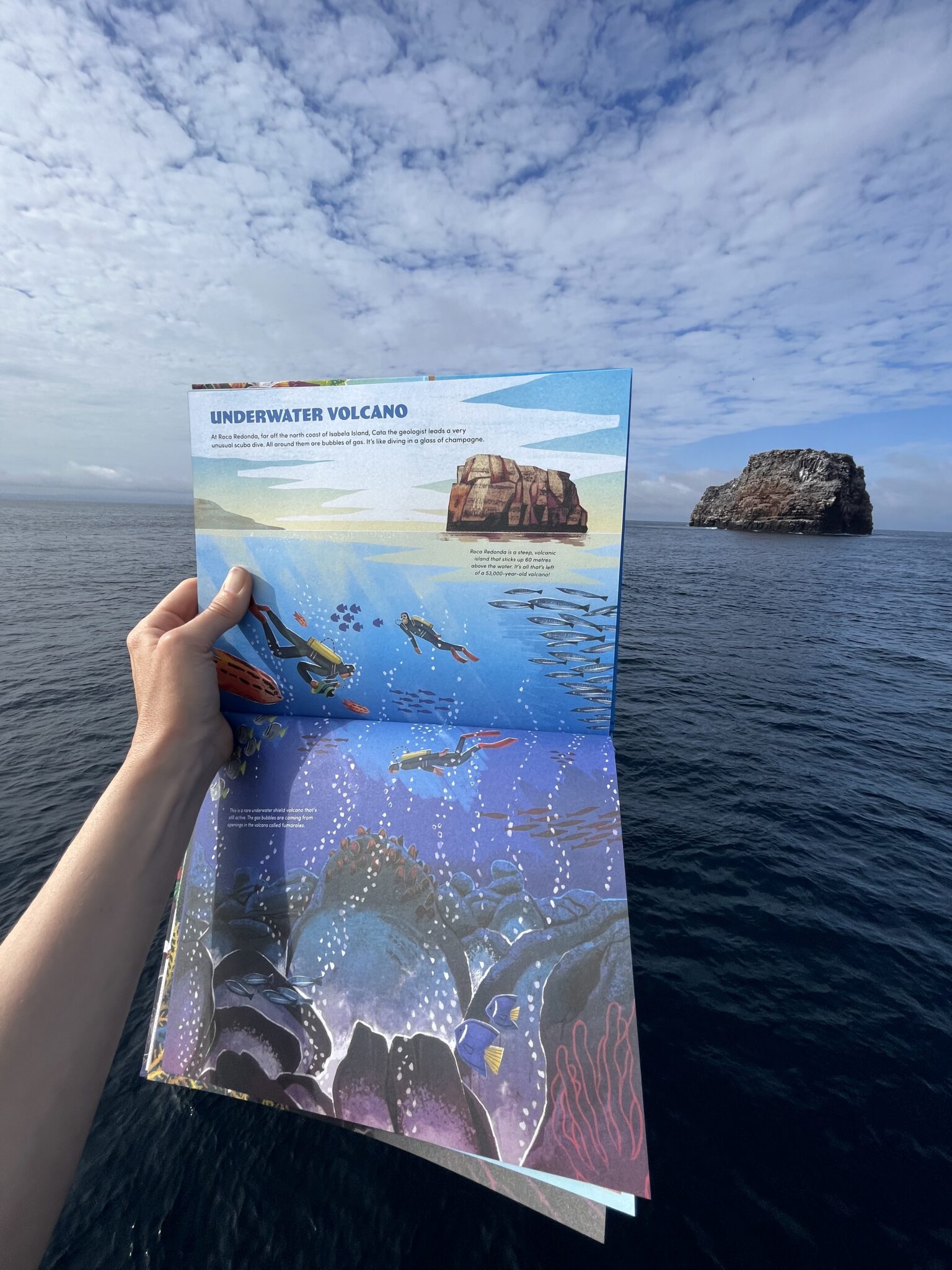
One of my favourite scuba dives was at another place that appears in the book. Roca Rodonda is an active volcano! I plunged into the water and found myself surrounded by bubbles. It really was like diving in a glass of champagne!
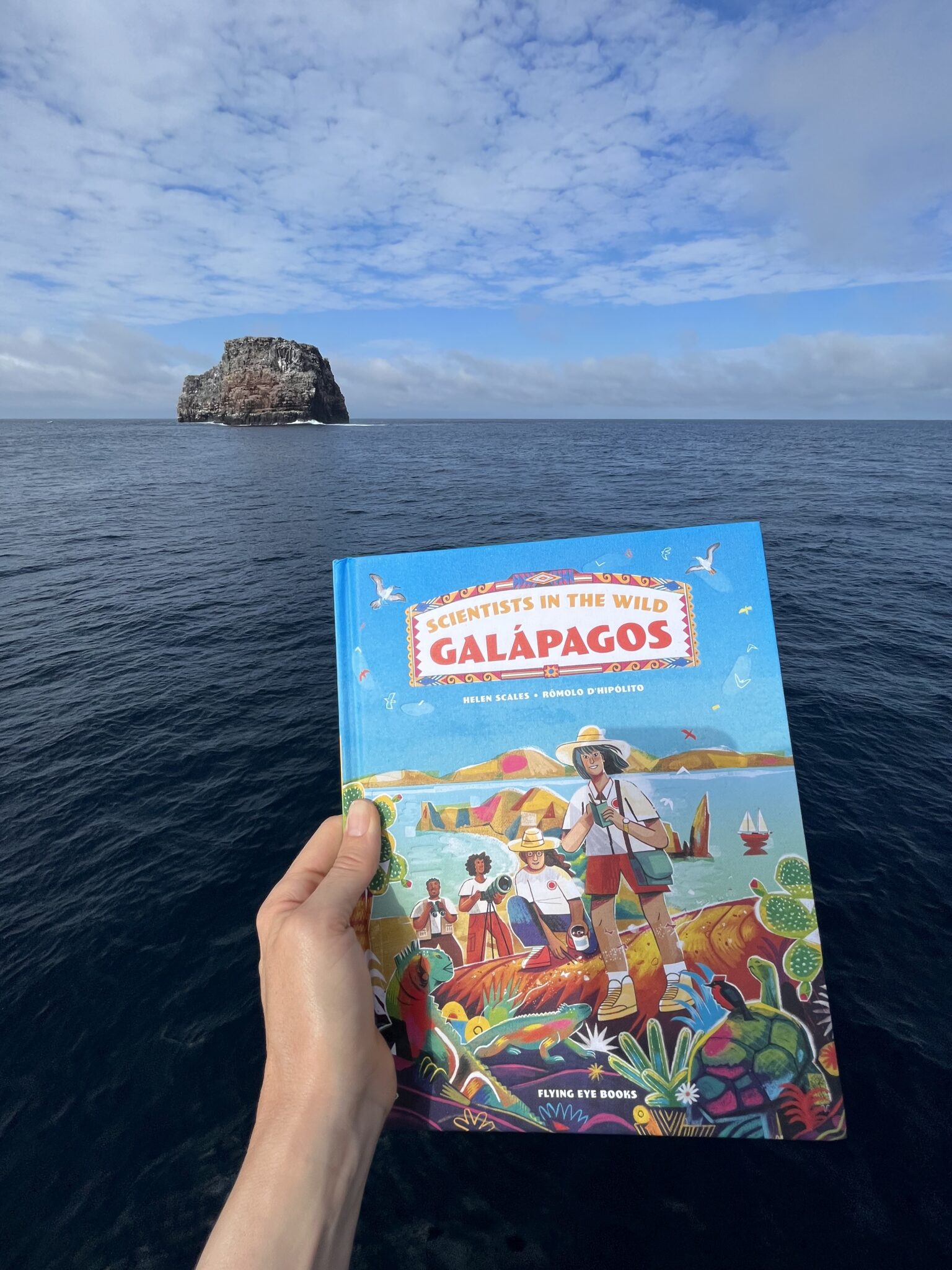
My trip to Galápagos was totally mind-blowing. I feel so lucky to have gone there and to be able to share this special place with readers. It truly is like nowhere else on Earth!
Happy World Ocean Day everyone.
Helen’s trip to Galápagos was supported by the Pulitzer Centre.