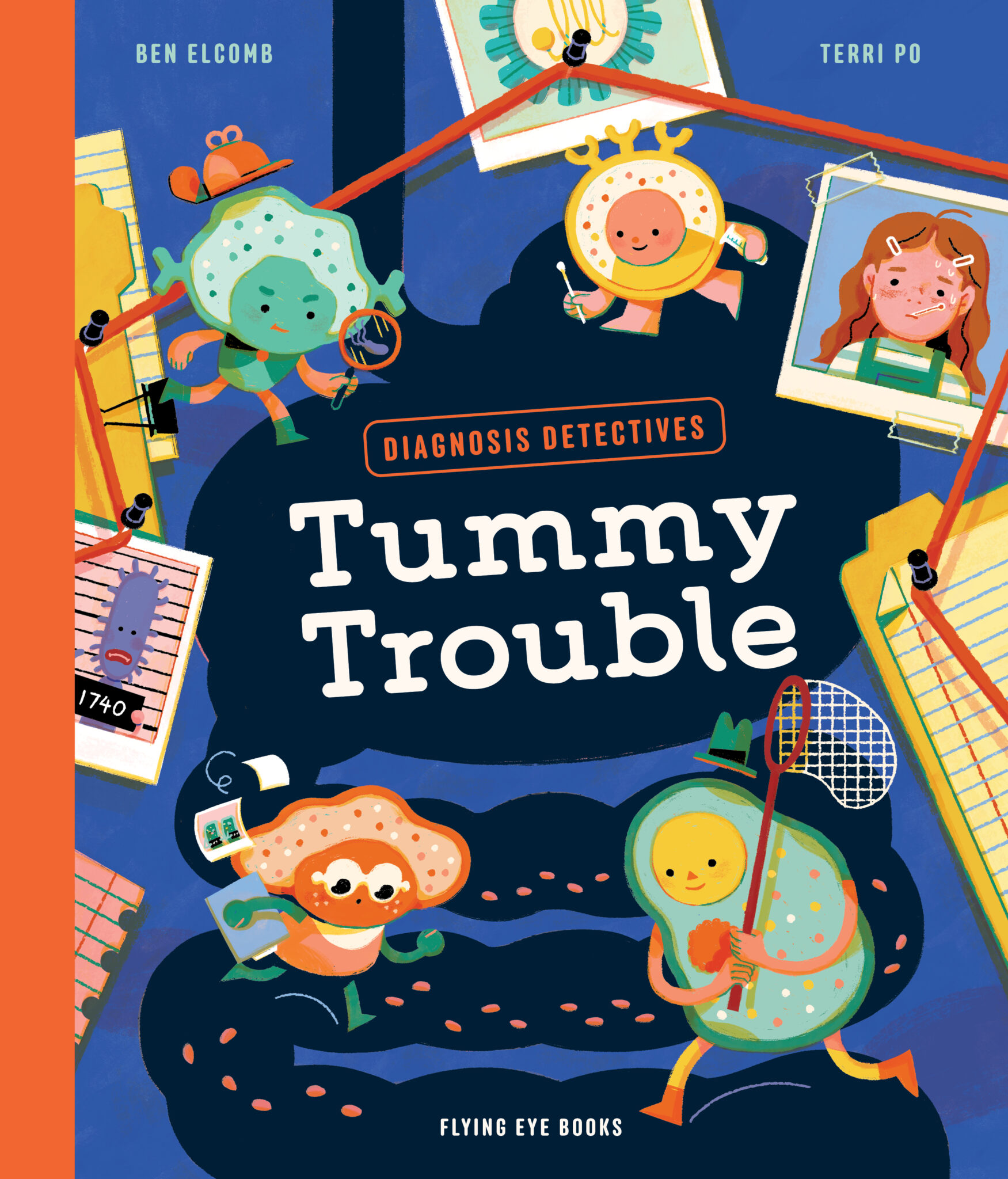
To celebrate the publication of Diagnosis Detectives: Tummy Trouble, we sat down with author Ben Elcomb, and illustrator Terri Po to meet the creators behind your new favourite bacterial investigators. Click the link below to get your copy now!
This book makes some quite yucky things approachable and interesting for younger readers, what drew you to this topic?
Ben: Let’s face it, the battles happening within all of us every day are pretty incredible and deserve to be celebrated, even if that involves discussing toilet habits occasionally. But open discussions normalise human bodily functions, and because of that makes kids more confident and not scared to visit doctors or worry about these things.
Children have a genuine fascination with all things gross. Finding out that some of the yuckiest things on the planet happen within your own body is pretty cool. Diagnosis Detectives gives the reader to chance to discuss things like vomit and poo without their grown-ups telling them not to be disgusting too!
Diagnosis Detectives: Tummy Trouble is a very unique book, blending lots of informative non-fiction content with a mystery narrative for the reader to follow. Was it difficult to balance the story with all that information?
Ben: Blending the facts with narrative helps to make a subject that can be quite heavy become something exciting to discover. A classic whodunnit detective story felt like the perfect vehicle to get to a diagnosis solution. It makes kids think about the problems to work on a solution like a junior doctor!
From a writing perspective, I actually broke each page down into the section with the narrative and the section with the facts. Not only did this make the book balanced, but both sides actually fed into each other.
Also, I’ve checked the writing rules and there’s nothing that actually says books either need to be fiction or non-fiction, so maybe it’s time to come up with a whole new genre for books like Diagnosis Detectives!
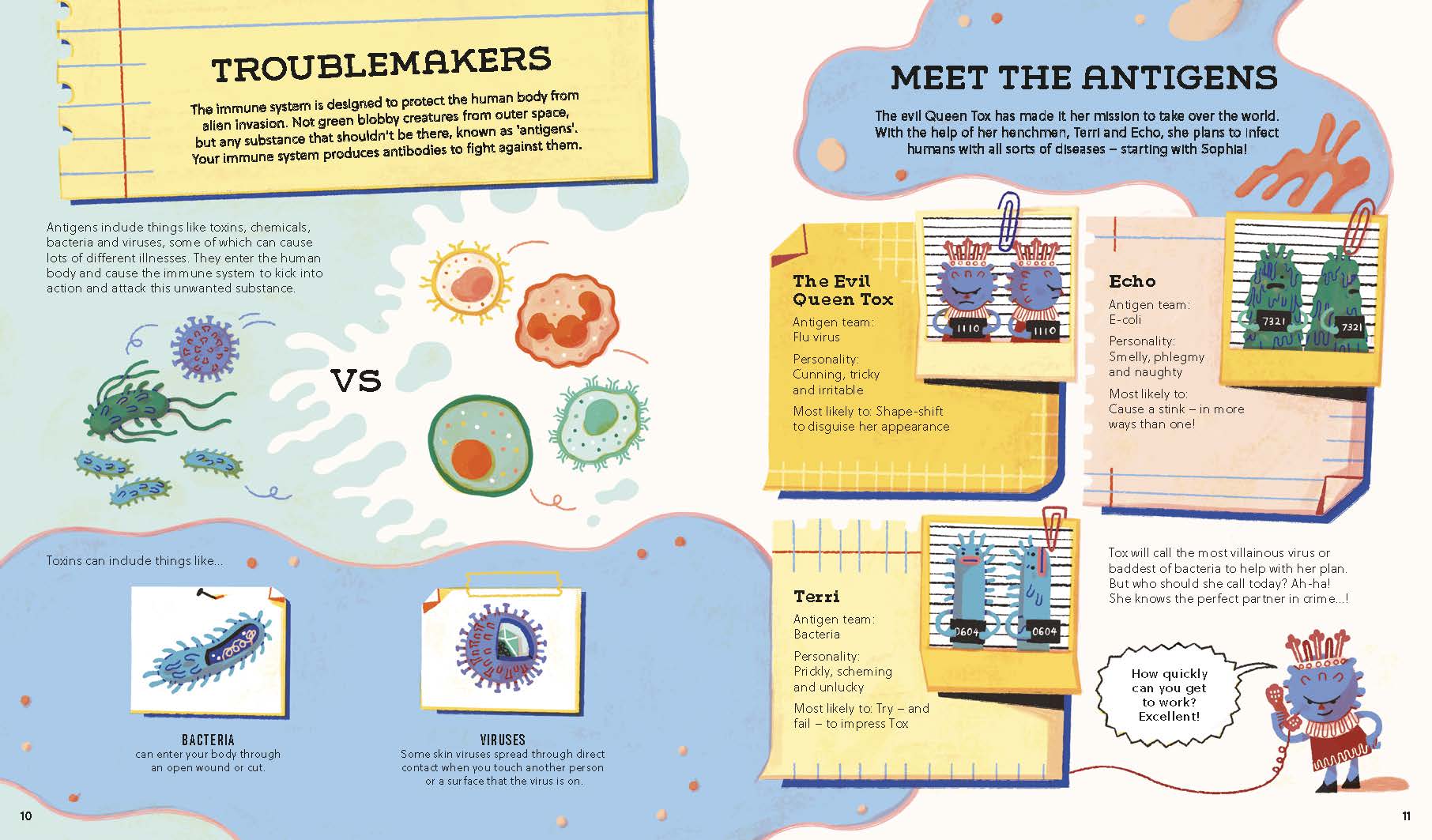
I can’t help but notice that one of the antigens is called Terri- Terri, how do you feel about that?
Terri: I love it! Whether it was intentional or not on Ben’s part, I thoroughly enjoy being the namesake of a scheming bacterial henchman.
Ben: I should also add that my own daughter is called Sophia, and I’m yet to tell her that there’s a book about a girl with her name who has tummy troubles. I hope she’s flattered and not too embarrassed!
How do you collaborate?
Ben: For this book, the words came first and then it was passed over to Terri to work her magic. I loved seeing her illustrations and think they really helped bring the book to life.
I had some ideas of what illustrations I thought should accompany the text, but I was blown by what they ended up becoming. I love Terri’s spin all the individual characters and how they look.
Terri: I worked on the illustrations after the story was written, so it was a fairly separate process. I mainly collaborated with the book designers to ensure the spreads looked right and worked with the text.
Terri- most of your work is non-fiction, do you use a lot of reference? What is it about non-fiction that you like so much/why do you prefer it to fiction?
Terri: I enjoy illustrating both fiction and non-fiction books equally, but being able to learn new things is a great bonus of the latter. I think the challenge with illustrating non-fiction books is about finding an equilibrium between realism and stylisation. How far can you push the depiction of an object, an animal, or in this case a microorganism, while still capturing its essence? I think it’s a really fun puzzle that I get to play with each time I work on a new non-fiction book.
Before I begin sketching, I tend to do a lot of research to collect visual material and references, as well as to read up on the topic to make sure I am familiar with it. Aside from curiosity, it is useful to be acquainted with the subject matter you’re illustrating because then you can start playing with it! For example, when I designed Queen Tox’s character, I gave her a little crown inspired by spike proteins found on the surfaces of a virus, and her ruff was inspired by the diagrammatic structure of RNA. Such small details might go unnoticed by most readers but I love leaving these kinds of Easter eggs in my illustrations.
Ben- You also work mainly in non-fiction, and came from a television background. Do you find the writing process for books very different to writing television scripts?
Ben: For two mediums that can seem quite different, there are actually lots of similarities in the writing processes. Both start with lots of research so that I have a broad understanding of the subject, and then it’s all about presenting those ideas in an engaging way.
Whether the audience is a reader of a book or a viewer of a programme, the goal is always to create something entertaining and totally engaging.
Diagnosis Detectives: Tummy Trouble
by Ben Elcomb and Terri Po
Join a team of quirky characters that live in the human body as they investigate the clues behind mystery symptoms to find each culprit to illnesses and ailments.
The Diagnosis Detective Agency work out what’s wrong inside their human body by investigating symptoms and inspecting suspects, before revealing the culprits causing tummy trouble.
Get your copy HERE